Understanding where Omninova's turmeric, pepper and coffee come from means understanding a hillside — not a farm, but a whole ecosystem shaped by elevation, shade and generations of tribal farming knowledge.
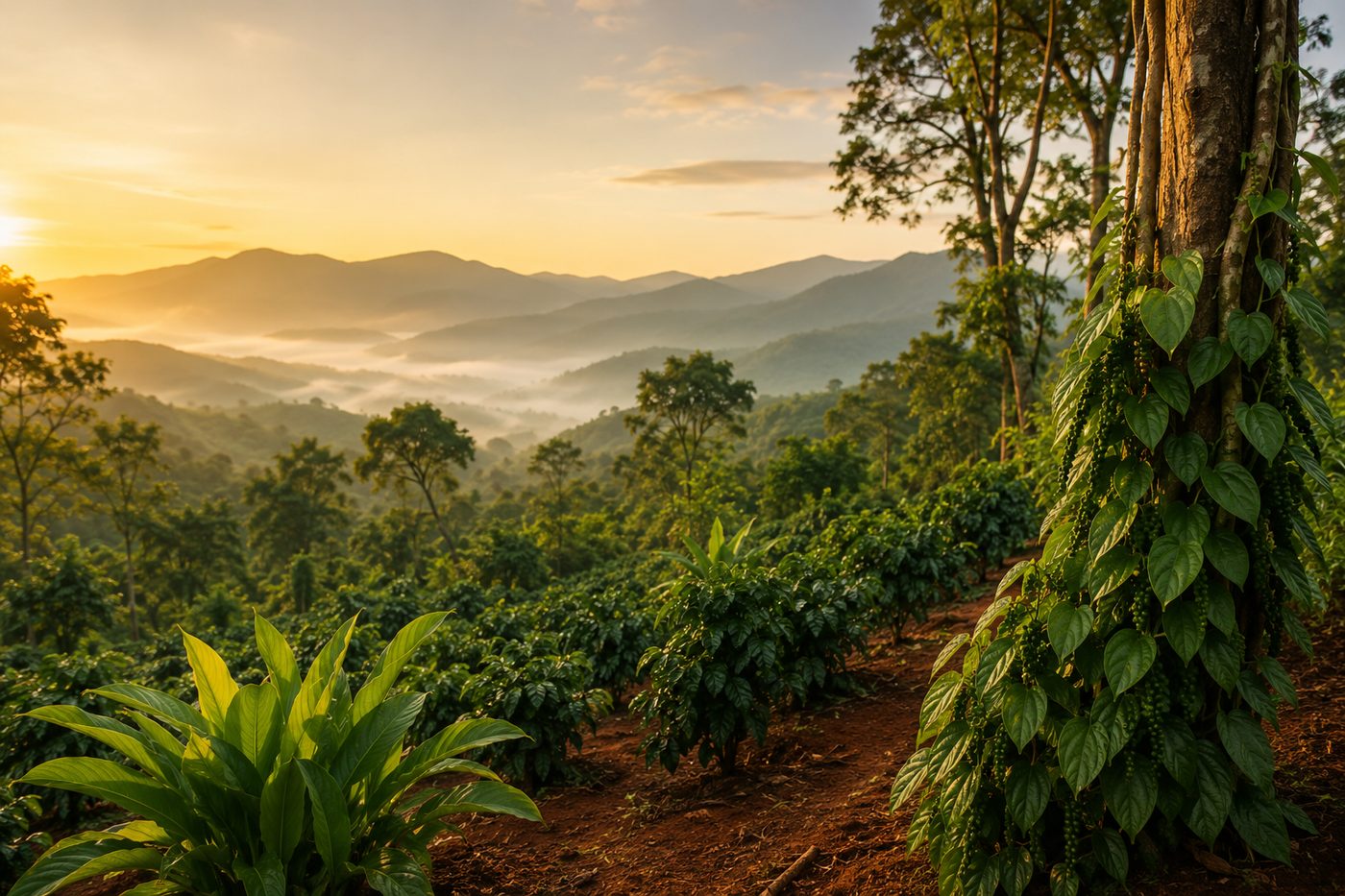
Drive inland from Visakhapatnam on the Andhra Pradesh coast, and the land begins to climb almost as soon as the city thins out. By the time you reach Araku Valley, in what is now Alluri Sitharama Raju district, you're standing at somewhere between 900 and 1,100 metres above sea level — high enough that mist settles over the hills most mornings, and the heat of the plains below never quite reaches up. This is the Eastern Ghats: dense forest, terraced hillsides, and a climate that happens to be close to ideal for three very different crops at once.
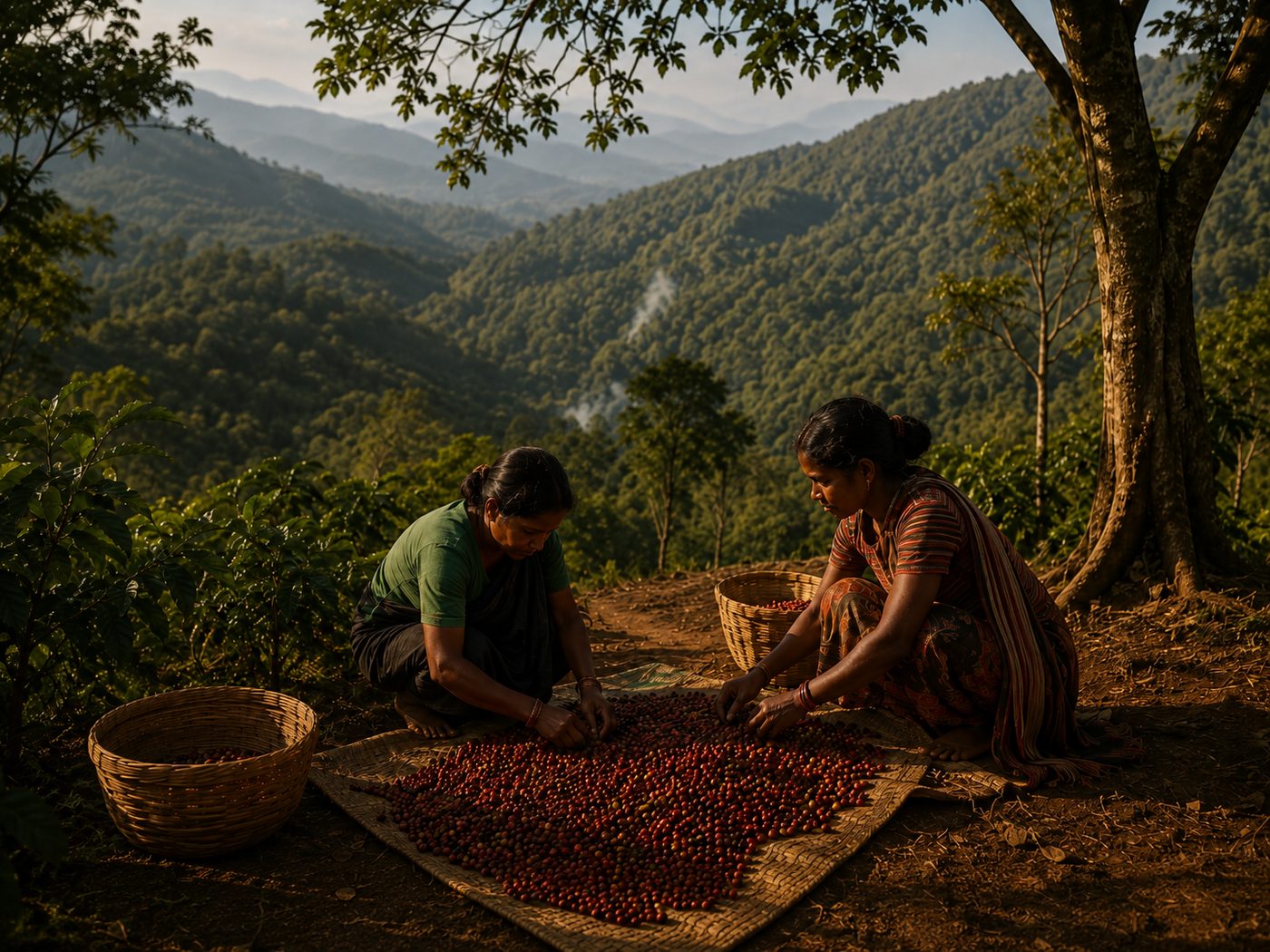
The people who farm this land are, overwhelmingly, from the region's Adivasi tribal communities — communities that have lived in these hills for generations, working smallholdings that are often under two acres per family. It's a landscape of forest interspersed with farmland rather than cleared plantation, and that distinction matters: crops here don't grow in isolated rows, they grow under a living canopy.
Coffee was first planted here in the late 1800s, under British-era forestry programmes, and largely fell out of active cultivation for decades afterward. From the late 1990s, a wave of community-led replanting and training brought the crop back to life — tribal farmers were trained in agronomy and processing, old groves were restored, and new trees went in under the shade of jackfruit, silver oak, mango and banana. Today, Araku's coffee carries a Geographical Indication tag, recognising it as a product distinct to this exact region — the kind of protected-origin status usually associated with wines and cheeses, not smallholder hill coffee.
Black pepper climbs the very same shade trees that shelter the coffee. Rather than clearing land for a separate pepper plantation, farmers train the vines up the trunks of silver oak and jackfruit already standing in the coffee plots — one tree, two crops, less pressure on the forest. Turmeric, meanwhile, tends to occupy the plots at the edges and in between, in the same red laterite soil, cured and dried using methods passed down through the same families.
Omninova International LLP is not a plantation and doesn't claim to be. Our role is more specific: to build honest, direct sourcing relationships with the growers and cooperatives working this hill belt, to grade and prepare turmeric, black pepper and coffee to the standard international buyers expect, and to handle the documentation and logistics that get a smallholder crop from a hillside in Andhra Pradesh into a warehouse in Hamburg or a roastery in Chicago — without losing the story of where it came from along the way.
We're a young company built around an old landscape. As we grow, we're extending the same principle beyond Araku — bringing saffron from the growing regions of Iran into the same collection, sourced with the same directness and the same respect for the people who actually grow it.
Talk to us about a shipment →Smallholder origin doesn't mean inconsistent quality — it means the opposite, when the sourcing relationship is direct. We work in lot sizes that reflect how this region actually farms: many small plots, carefully graded and combined to meet export volume, rather than a single industrial estate pretending otherwise.
For buyers in Germany and the United States, that means paperwork that holds up, consistent grading, and a story worth telling on your own packaging — because it's true.